


By Himanshu Bakshi and Hitesh Kumar
Transfer pricing sits at the critical nexus of law, economics and commerce. It is not merely a computational exercise; it is an evidentiary discipline in which economic substance must be articulated, substantiated, and capable of withstanding regulatory scrutiny. Against this backdrop, the rapid emergence of artificial intelligence in the TP landscape warrants careful reflection and strategic consideration.
This article does not intend to envisage that AI will make TP simple, that taxpayers can manage compliance in-house at the touch of a button, or that consultants can deliver work product at a fraction of current cost. While part of this narrative should be accurate, the more meaningful question is where AI can create genuine value across the TP lifecycle, and what professional disciplines must govern its responsible use. Across the key five domains of TP life cycle discussed below (operational TP, year-end closure, testing and compliance, audits and dispute resolution), AI’s role is best understood as an accelerator of professional capability, not a substitute for the judgement at the heart of this discipline. Let us delve into this.
TP LIFE Cycle Implications
1. Operational Transfer Pricing
For MNE groups managing TP across many entities and jurisdictions, monitoring consistent pricing policies in real time has historically been impractical. The consequence is reactive year-end true-ups, secondary adjustments, and avoidable audit exposure. AI has the potential to fundamentally change this cadence. With standardised financial data, it can compute margins in near real time, dynamically model value chain profit flows, and automatically flag deviations, shifting TP from reactive compliance to proactive risk management.
Automated tracking of agreement expiry dates, documentation renewal cycles, and filing deadlines further reduces the risk of procedural lapses.
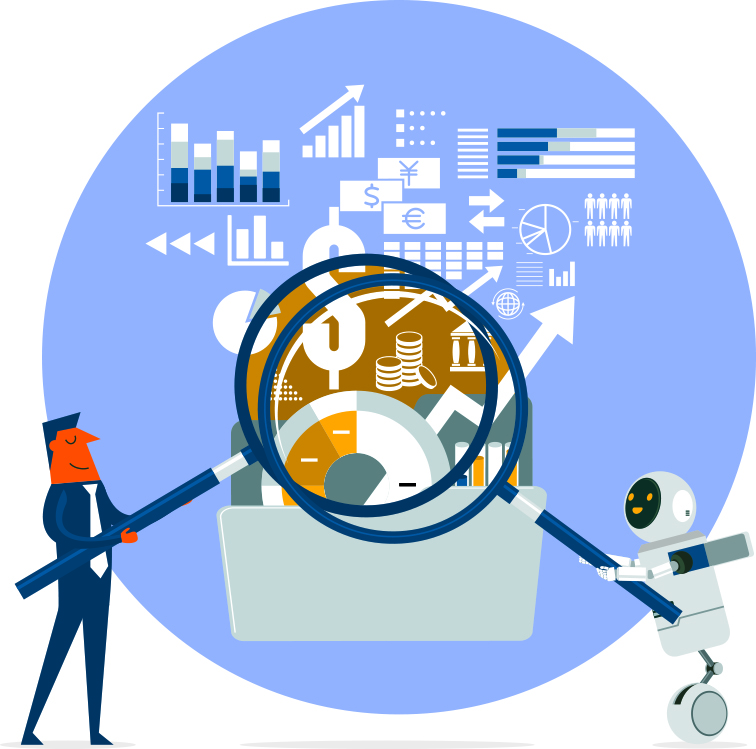
The technological building blocks already exist; the real question is the pace at which organisations will embed them into operational TP processes. However, the design, validation and approval of such workflows would still require strong internal controls and professional sign-off to ensure that automated adjustments do not inadvertently create accounting, tax or withholding consequences in other jurisdictions. Ultimately, this will guide taxpayers toward embracing Tax Corporate Governance, which represents the future of compliance and accountability.
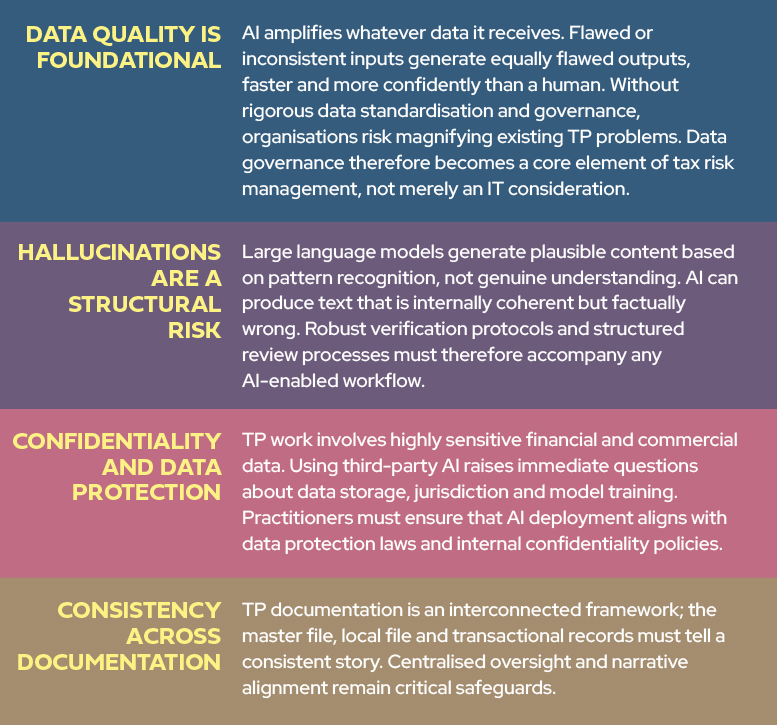
However, these capabilities depend heavily on the quality and standardisation of underlying data. Fragmented chart-of-accounts structures and inconsistent data across multiple ERPs can amplify problems when AI is applied, rather than resolve them. Put simply, AI does not repair weak data architecture; it exposes it. To unlock the full potential of operational AI in transfer pricing, investment in robust data infrastructure, clear SOPs, and strong governance frameworks is a nonnegotiable prerequisite.
2. Year-END book Closures
Agentic AI (capable of multi-step tasks with minimal human input) could, in principle, extract ERP data, compute margins, compare them to policy ranges, identify deviations, and propose year-end adjustments in a single workflow with the creation of trail documentation. Agentic AI could model interconnected tax and trade outcomes across jurisdictions, allowing MNEs to anticipate not only transfer pricing adjustments but also their ripple effects on other tax topics such as indirect taxes, withholding tax obligations etc.
Further, building these strategic governance checkpoints at the year-end closure has become even more critical in the context of Pillar Two (P2), which mandates arm’s length pricing. When book profits are taken as the base for P2 tax liability, precision in year-end closure is non-negotiable. Any misalignment between transfer pricing adjustments and statutory accounts could distort the effective tax rate calculation, potentially leading to over- or under-assessment of top-up taxes.
3. TP Documentation Compliance
TP documentation is arguably the area where AI adoption will have the widest positive implications and where professional discipline remains most critical. The use cases are compelling: AI can generate transfer pricing documentation, automate the selection of comparables for benchmarking, transcribe and summarise functional interviews to support FAR analysis, handle translations, and maintain centralised compliance dashboards that track documentation status, flag risks, and trigger automated actions or escalation.

The expanding compliance burden makes these tools increasingly necessary. Malaysia’s TP Rules 2023 and TP Guidelines 2024 go meaningfully beyond the OECD’s minimum documentation standards, demanding more contextualised and granular disclosures specific to Malaysian operations across Schedules 1, 2 and 3, as well as the Appendix A requirements introduced in the 2024 Guidelines for specific controlled transactions. Additional local nuances such as the preference for local comparables, reliance on single-year data, or narrower ranges in jurisdictions like Malaysia can be embedded into AI models. This ensures that automation does not dilute jurisdiction-specific requirements but instead strengthens compliance while enhancing efficiency.
A word of caution in this regard: generative AI can hallucinate by producing confident sounding but factually incorrect content or failing to maintain consistency across documentation prepared for different entities. Documentation is evidentiary in nature; any inaccuracy may weaken credibility under audit or in litigation. Accordingly, every AI-assisted draft must undergo rigorous professional review by individuals who understand the underlying transactions and commercial context. The responsibility cannot be delegated to a language model.
4. Transfer Pricing Audits
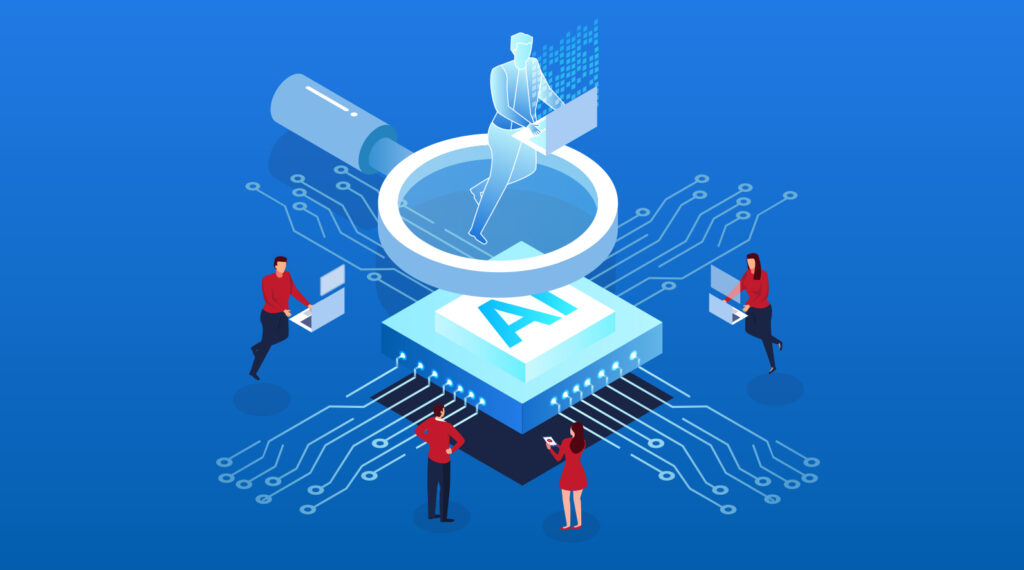
AI would reshape TP audit activity on both sides of the table. The shift is not merely technological; it is strategic. Audit selection is anyway becoming data-driven rather than anecdotal. Tax authorities can use AI to analyse CbCR filings, financial statements, statutory accounts and tax returns to identify risk indicators: low margins in high-function entities, divergence between reported profits and economic substance, or sudden changes in intercompany financing flows. For revenue authorities, AI effectively multiplies analytical capacity without proportionately increasing manpower.
Beyond risk selection, AI can expedite substantive audit activity by processing large financial datasets and reviewing documentation for gaps or inconsistencies, compressing review timelines from months to weeks and intensifying audit cycles correspondingly. For taxpayers and their advisors, the most valuable application is audit preparation: systematically assessing TP position robustness, organising and indexing evidentiary material.
As AI narrows the information asymmetry between tax authorities and taxpayers, the quality of underlying documentation and real-time monitoring will matter more, not less. Technological parity elevates the premium on accuracy, consistency and defensible economic reasoning.
5. TP Disputes and Litigation
Dispute resolution is the most intellectually demanding stage of the TP lifecycle and, in some respects, the most interesting area for understanding AI’s limits. AI’s practical utility here lies in research and document management: identifying relevant rulings across jurisdictions, surfacing favourable precedents, summarising voluminous hearing records and drafting appeal documents, all of which can materially improve efficiency in complex, multi-year disputes.
Courts are beginning to engage with AI cautiously. In the UK, judges have been formally permitted to use AI for administrative support such as drafting emails or summarising meetings while being warned against relying on it for legal research or analysis.¹ In the US, however, improper use has already surfaced: federal judges admitted that AI-generated drafts of court orders contained serious errors, including misquotations of law and fabricated references.² These incidents have underscored both the potential and the risks of AI in judicial settings, prompting calls for stronger, permanent policies to govern its use.
The above clearly display that AI can support organisation, research and drafting, but strategy, legal argumentation and persuasive presentation before a court remain uniquely human. Credibility before a court is cumulative and fragile; reliance on unverified AI output can undermine both.
The Non-Negotiable Guardrails
Implications for the TP Professionals
The net effect of AI adoption in TP will be a reallocation of professional time: away from data gathering, document formatting and routine drafting; towards analytical, strategic and advisory work. For in-house teams, this means more capacity for policy design, proactive risk management and business engagement. For external advisors, it offers the opportunity to deliver deeper insight and value, moving beyond the routine TP documentation work. The competitive advantage of professionals will increasingly hinge on interpretation, judgement, and strategic positioning, rather than transactional execution.
AI is not a substitute for expertise, nor will it dramatically reduce TP costs. The complexity of functional analysis, method selection, audit management and dispute resolution remains unchanged. AI raises the baseline quality and timeliness of information available to professionals, and with it, stakeholder expectations for rigour and responsiveness. Teams that cultivate AI literacy alongside TP expertise will be better positioned than those who treat technology as an external tool. Future-ready professionals will seamlessly integrate technological fluency with deep regulatory understanding, leveraging AI to enhance judgement rather than replace it.
Looking Ahead
We are at an early stage in the integration of AI into TP practice. The tools are improving rapidly, use cases are multiplying, and both tax authorities and practitioners are actively exploring where AI adds the most value. The guardrails, however, are still being built; governance frameworks, data protocols, professional standards for AI-assisted work product and judicial guidance on AI in proceedings are all works in progress.
The organisations best positioned for what comes next are those thinking carefully now about data infrastructure, AI governance and how professional expertise and AI capability can be combined rather than substituted. The future of transfer pricing will not be defined by automation alone, but by disciplined integration where technology enhances analytical depth while accountability stays firmly human.
¹ Artificial Intelligence (AI) Guidance for Judicial Office Holders
² Federal judges admit staff used AI for error-ridden court orders | Fox News; Grassley Releases Judges’ Responses Owning Up to AI Use, Calls for Continued Oversight and Regulation
Himanshu Bakshi is Director, Tax–Transfer Pricing, Deloitte Malaysia Tax Services Sdn. Bhd.
Hitesh Kumar is Senior Manager, Tax–Transfer Pricing, Deloitte Malaysia Tax Services Sdn. Bhd.
The views expressed in this article are those of the authors in their personal capacity and do not represent the views of Deloitte Malaysia.