

By the MIA Sustainability, Digital Economy and Services Team
Taxation, reporting and sustainability requirements continue to evolve, presenting new considerations for organisations and accountancy professionals alike. In this environment, staying abreast of regulatory developments, emerging practices and technical guidance remains essential to supporting effective decision-making, compliance and governance.
This quarterly update highlights key developments and initiatives undertaken by MIA between January and March 2026 to support members in navigating these evolving requirements while upholding high standards of professionalism and public trust.
Improvements to The Tax Agent e-Filing (TAeF) System on MyTax
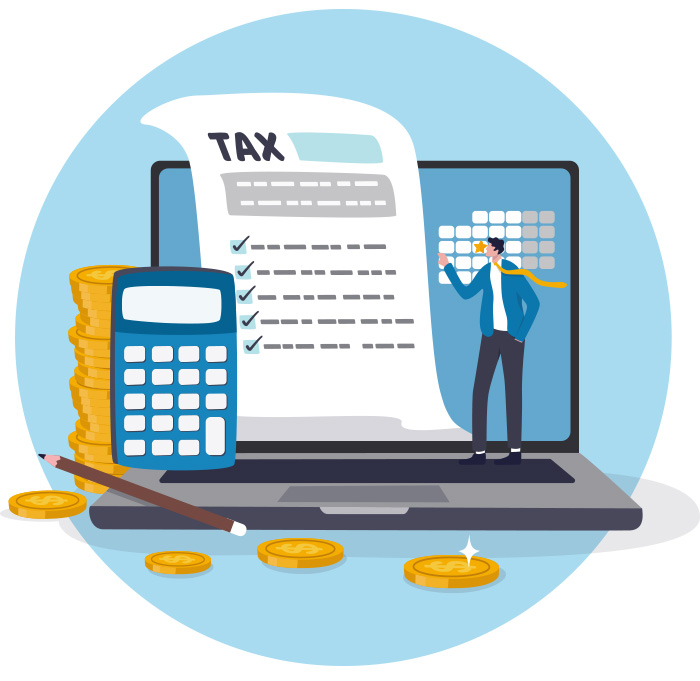
The Malaysian Institute of Accountants (MIA), in collaboration with the Malaysian Institute of Certified Public Accountants (MICPA) or the Institutes, has taken a proactive role in supporting ongoing enhancements to Malaysia’s tax administration system. Following an invitation from Lembaga Hasil Dalam Negeri Malaysia (HASiL), the Institutes participated in a joint industry effort to provide constructive feedback on the Tax Agent e-Filing (TAeF) platform.
On 13 March 2026, a consolidated set of recommendations was formally submitted to HASiL. The submission focused on practical improvements to system functionality, user accessibility, and administrative efficiency. Key recommendations included improvements to user management features, expanded access for tax agents, enhanced reporting and download capabilities, as well as stronger system integration across related tax applications.
This initiative reflects the Institute’s commitment to working closely with regulators to strengthen the tax ecosystem. By sharing industry insights and advocating for user-centric improvements, MIA and MICPA aim to support a more efficient, secure, and responsive digital tax environment for both practitioners and taxpayers.
Tax Corporate Governance in Practice
On 31 March 2026, MIA hosted a webinar titled ‘Tax Corporate Governance in Practice’, which attracted close to 300 MIA members. The session brought together insights from HASiL and industry practitioners, highlighting the growing shift towards collaborative compliance.
Zainal Azam Zainal Ratin, Director of Tax Corporate Governance Section of Tax Compliance Sector at HASiL, shared insights into the evolution of the Tax Corporate Governance (TCG) programme from a traditional audit-driven compliance model to a more transparent, proactive and forward-looking governance framework. The message was clear: tax is no longer just about meeting obligations, but also about embedding accountability, proactively managing risks, and fostering trust through early engagement with the tax authority.
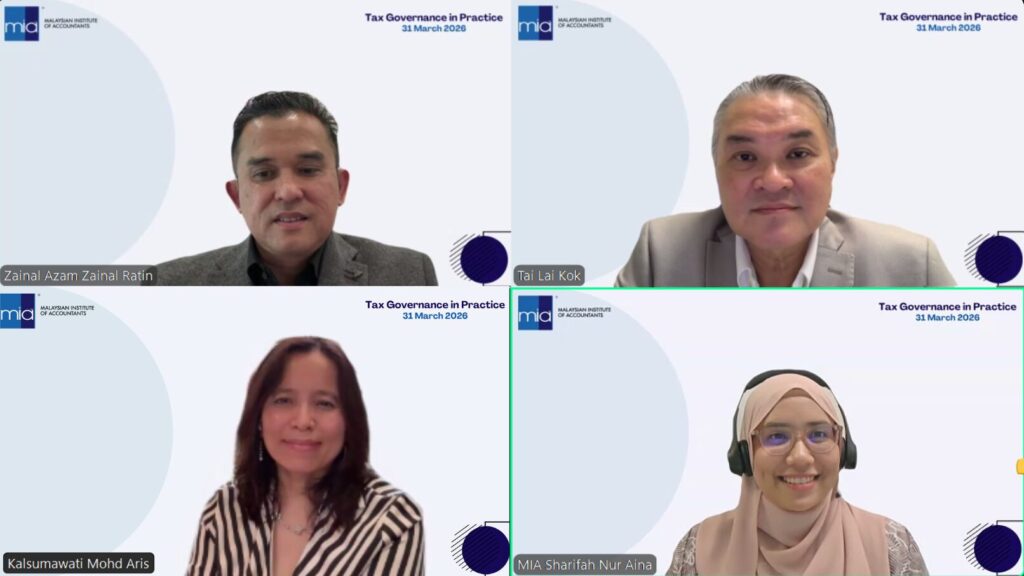
The accompanying panel discussion, moderated by Tai Lai Kok, Chair of the MIA Taxation Practice Committee, featured Kalsumawati Mohd Aris, Country Tax Manager at SHELL Malaysia Limited, alongside Zainal Azam. The discussion brought practical perspectives to life, highlighting the transformation of tax into a strategic business function that requires strong leadership commitment and effective collaboration across finance, legal, and operational teams.
Panellists emphasised that effective tax governance relies on defined internal frameworks, clear documentation, and continuous monitoring, all of which are increasingly supported by digital tools and automation.
As the session concluded, participants were encouraged to view TCG not as an added burden, but as a strategic investment. In an increasingly complex tax environment, organisations that embrace governance-led approaches will be better positioned to navigate risks, build trust, and sustain long-term growth.
Digital Assets and Integrated Reporting
In collaboration with the Malaysian Accountancy Research and Education Foundation (MAREF), the Institute organised a complimentary webinar titled “Insights from MAREF Research Projects: Digital Assets and Integrated Reporting” on 10 March 2026. The webinar commenced with welcome remarks by Associate Professor Dr Zarina Zakaria, Chair of MAREF.
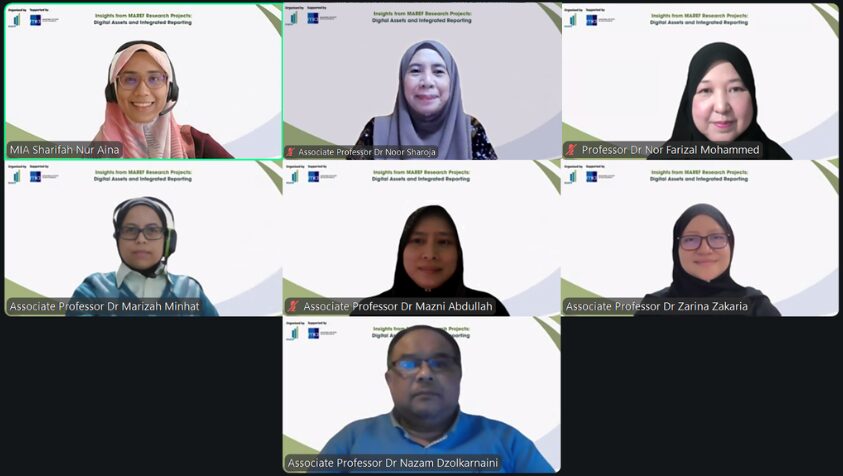
The session presented key findings from two MAREF-funded research projects. The first, Valuation of Digital Assets, was presented by Associate Professor Dr Noor Sharoja Sapiei of Universiti Malaya and Associate Professor Dr Marizah Minhat of the University of Bradford. The second, Correlation between Corporate Reporting using the Integrated Reporting Framework and Company Performance in the Malaysian Market in relation to Market Value and Cost of Capital and whether IR Results in Better Investor Confidence, was presented by Professor Dr Nor Farizal Mohamed of Universiti Teknologi MARA.
The discussions highlighted gaps in current accounting standards relating to digital assets, as well as challenges associated with valuation and reporting practices. The webinar also explored how the adoption of Integrated Reporting is associated with higher market valuation and improved investor confidence among Malaysian listed companies, while identifying practical challenges faced by organisations in implementing the IR framework.
Reframing Climate Disclosures: IPSASB’s Roadmap to Sustainable Public Sector Reporting
During the quarter, the Institute published an article highlighting key insights from the session “Reframing Climate Disclosures: IPSASB’s Roadmap to Sustainable Public Sector Reporting”, held during the MIA International Accountants Conference 2025.
The session is in tandem with the International Public Sector Accounting Standards Board (IPSASB)’s issuance of its inaugural Sustainability Reporting Standard, IPSASB SRS 1 Climate-related Disclosures, marking a significant milestone in advancing sustainability reporting within the public sector. The standard introduces a global standard for disclosing climate-related risks and opportunities, aligned with IFRS S2 Climate-related Disclosures issued by International Sustainability Standards Board (ISSB).
The article further underscored the pivotal role of public sector accountants in strengthening climate governance and accountability. It also highlighted important implementation considerations, including data readiness, capacity-building, inter-agency coordination, and the need for integrated thinking to translate reporting standards into meaningful practice. Click here to view the article.
Members are encouraged to read the full article for deeper insights into the evolving sustainability reporting landscape and its implications for the public sector.
Conclusion
The developments highlighted this quarter reflect the increasingly interconnected nature of taxation, reporting, sustainability and governance. As regulatory expectations evolve and organisations face growing demands for transparency and accountability, access to timely insights and practical guidance becomes increasingly important.
Through its technical initiatives, stakeholder engagements and knowledge-sharing platforms, MIA continues to support members in strengthening professional capabilities and responding effectively to emerging developments. In doing so, the Institute contributes to a profession that is equipped to uphold public trust, create long-term value and support Malaysia’s economic development.