
By MIA Professional Practices and Technical
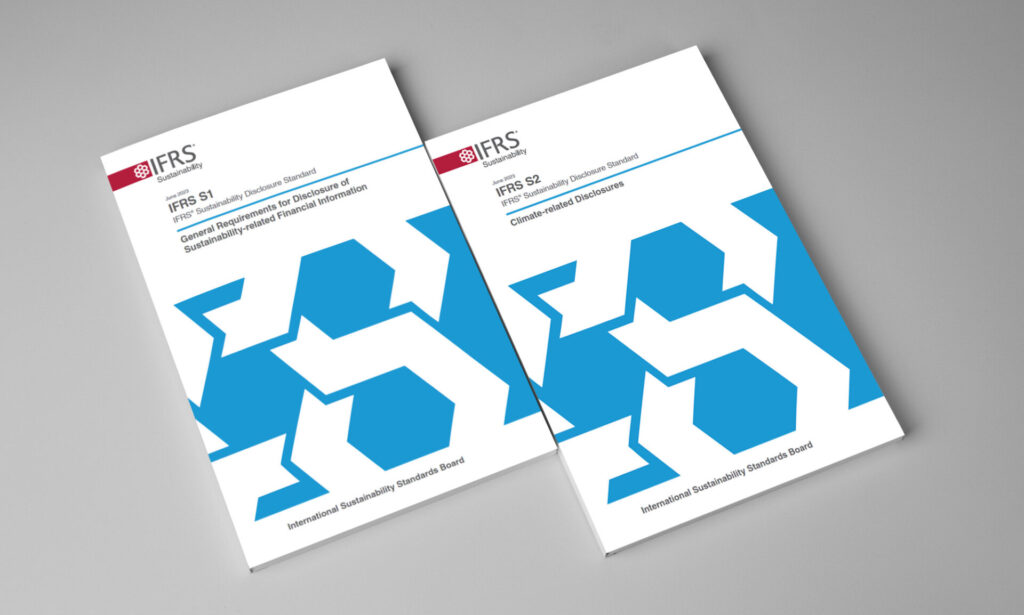
With the introduction of IFRS S1 General Requirements for Disclosure of Sustainability-related Financial Information (IFRS S1) and IFRS S2 Climate-related Disclosures (IFRS S2), attention has increasingly turned to how Integrated Reporting
remains applicable within the evolving sustainability reporting landscape. Rather than diminishing its relevance, these developments reinforce the continued value of Integrated Reporting. In fact, IFRS S1 and IFRS S2 incorporate concepts that are closely aligned with Integrated Reporting principles, including the emphasis on connected information reflected in IFRS S1.
Globally, the reporting landscape is evolving towards greater connectivity, not fragmentation. The IFRS Foundation has affirmed that Integrated Reporting remains relevant, noting that IFRS S1 and IFRS S2 disclosures can be embedded within an integrated report to provide comparable, material and decision-useful information.
(IFRS Foundation, Integrated Reporting FAQs – click here). Similarly, the work of the European Securities and Markets Authority (ESMA) on integrated reporting reflects growing recognition of the need for coherent and connected reporting (ESMA Final Report, 2026). As sustainability disclosures expand, the challenge is no longer producing more information, but producing credible, meaningful and connected disclosures. In this context, Integrated Reporting remains highly relevant for communicating long-term value creation.
Similarly, the work of the European Securities and Markets Authority (ESMA) on integrated reporting reflects growing recognition of the need for coherent and connected reporting (ESMA Final Report, 2026). As sustainability disclosures expand, the challenge is no longer producing more information, but producing credible, meaningful and connected disclosures. In this context, Integrated Reporting remains highly relevant for communicating long-term value creation.
Recent insights from the Focus Group Discussion: Evaluating the Integration Journey: How Integrated Reporting Adopters are Embracing IFRS S1 and IFRS S2 — Progress, Challenges and Lessons Learnt (FGD) highlight the continued relevance of Integrated Reporting.
During the FGD, insights from Malaysian Integrated Reporting (IR) adopters indicated that integrated thinking remains highly relevant as the underlying management discipline that enables organisations to respond more strategically and cohesively to the heightened demands of IFRS S1 and IFRS S2. By fostering connectivity across strategy, governance, risk management, performance and decision-making, integrated thinking helps organisations embed sustainability-related considerations into how the business is managed and value is created over the short, medium and long-term. While not all IFRS S1 and IFRS S2 disclosures would necessarily be presented within the Integrated Annual Report (IAR), the principles of integrated thinking provide the foundation for more coherent, decision-useful, and connected corporate reporting across multiple reporting channels.
A more demanding sustainability reporting landscape
IFRS S1 and S2 significantly raised expectations for sustainability disclosures. Organisations are now required to explain not only sustainability risks and opportunities, but also how these matters affect financial position, performance and future prospects. This requires stronger governance, enhanced data collection and clearer connectivity between sustainability information and financial reporting.
Practitioners have observed that many of the challenges encountered in implementing IFRS S1 and S2 are not technical in nature. Rather, they stem from fragmented reporting processes, difficulty translating qualitative sustainability risks into quantified financial impacts, and gaps between sustainability, finance and risk teams.
As one FGD participant observed,“The market still struggles to connect ESG budgets, operational outcomes and financial impacts, which is at the heart of what IFRS S1 and S2 require.”
These challenges become more pronounced where sustainability reporting is treated as a parallel or standalone exercise rather than embedded within core business, risk and financial processes.
Integrated thinking as an enabler of IFRS S1 and S2
Integrated thinking, which underpins Integrated Reporting, directly addresses these challenges. It encourages organisations to view strategy, governance, performance, risks and sustainability as parts of a single system rather than as siloed disclosures. In addition, it helps organisations move beyond siloed reporting by recognising the interconnectedness of financial and non-financial risks, supporting a more coherent approach to disclosures.
Integrated thinking also provides a practical structure for interconnectivity by linking sustainability risks, including climate and nature-related impacts, to business strategy, capital allocation and long-term value creation. It also supports clearer articulation of dependencies and trade-offs across different capitals, aligning naturally with the intent of IFRS S1 and S2.
As one FGD participant observed: “Integrated thinking helps organisations move from robust reporting to strategic, interconnected reporting, especially when discussing long-term risks and scenarios at Board level.”
Rather than producing multiple disconnected reports, many organisations emphasised the importance of a single, coherent narrative that explains how sustainability considerations influence decision-making and financial outcomes. This approach not only reduces duplication but also enhances clarity and usefulness for investors.
Strengthening governance and Board engagement

Another consistent theme emerging from practice is the growing involvement of Boards and Audit Committees in sustainability disclosures. Under IFRS S1 and S2, sustainability information is no longer viewed as supplementary. Strong committee support, particularly from audit committees, drives organisational effort and resourcing, with senior responsible officers required to provide balanced reporting. In turn, sustainability disclosures are expected to meet financial statement-level rigour, supported by robust audit trails and documentation. In addition, Boards are increasingly aware of potential legal exposure arising from misstatements, while seeking consolidated views through country-level committees to ensure material issues are properly escalated.
As one FGD participant indicated, “Audit committees are now expecting sustainability disclosures to meet financial statement-level rigour, including strong audit trails and documentation.”
Integrated Reporting supports stronger Board engagement by framing sustainability matters within the broader context of strategy, risk management and performance. Boards are better positioned to challenge assumptions, understand financial trade-offs and assess the resilience of the business model over the medium and long-term.
This reinforces the role of Integrated Reporting as a governance tool rather than merely a reporting framework.
Improving investor confidence through connectivity
From an investor perspective, the value of Integrated Reporting lies in its ability to connect sustainability performance with financial value creation. Investors increasingly seek decision-useful information that explains how sustainability risks and opportunities affect cash flows, cost of capital and long-term competitiveness.
Integrated Reporting provides a structure for communicating this connectivity clearly. By linking sustainability initiatives, transition plans and risk mitigation strategies to financial outcomes, organisations can present a more credible and balanced narrative to providers of financial capital.
“Integrated Reporting helps organisations explain not just what sustainability issues they face, but why those issues matter to long-term value creation,” stressed an FGD participant.
Participants also noted that while sustainability disclosures continue to expand, conciseness remains a challenge. Integrated Reporting can serve as the overarching narrative that ties together management discussion and analysis, risk reporting and sustainability disclosures, helping users navigate an increasingly complex reporting environment.
Ethics, assurance and the credibility of sustainability information
As sustainability information becomes more closely linked to financial decision-making, ethical considerations assume greater importance. Practitioners emphasised the need to avoid misleading or overstated claims, particularly amid rising concerns over greenwashing. Tone from the top was identified as critical, with Boards expected to take clear responsibility for the credibility, balance and integrity of sustainability disclosures.
Integrated Reporting reinforces ethical reporting by promoting transparency, accountability and balanced communication. It encourages organisations to explain uncertainties, limitations and areas requiring further development, rather than focusing solely on positive outcomes. Many organisations reported that sustainability and data integrity risks are escalated to the audit committee, risk committee and the Board, while recognising that data accuracy must begin at the operations level and be supported by clear accountability within the respective operational departments.

To support this, organisations highlighted the importance of digital systems that clearly demonstrate data ownership, verification and correction processes, helping to reduce the risk of errors or manipulation. Ethical reporting was therefore widely regarded as a shared responsibility across the organisation, rather than one that sits solely with the sustainability function.
Internal audit functions were also identified as playing a critical role in strengthening data quality, governance and assurance readiness, particularly given the volume and complexity of sustainability information required under IFRS S1 and S2. By providing independent challenge and oversight, internal audit supports the credibility of disclosures and reinforces ethical behaviour across the organisation.
MIA’s role in advancing integration and readiness
Against this evolving backdrop, MIA continues to play an important role in supporting the profession and organisations in Malaysia in navigating the integration journey.
Through sustained advocacy, capacity-building and practitioner engagement, MIA has consistently emphasised that compliance alone is insufficient. Strong governance, integrated thinking and sound professional judgement remain critical to the credibility of sustainability reporting.
Recent engagements, including this FGD, have underscored the need for continued guidance and knowledge sharing, particularly in areas such as materiality assessment, scenario analysis, financial impact quantification, data governance and assurance readiness. MIA is well positioned to facilitate dialogue between preparers, auditors, regulators and standard setters, helping to bridge global standards with local implementation realities, and it will continue to do so.
“While regulation creates the imperative, organisations such as MIA play a critical role in strengthening governance maturity, building capacity and enabling meaningful market adoption.”
Looking ahead: building capability through continued engagement and learning
As organisations continue to navigate an increasingly complex sustainability reporting landscape, ongoing engagement, capability-building and practical guidance will remain essential. In this regard, MIA will continue to support the profession through targeted initiatives, including practitioner-focused dialogues, webinars, focus group discussions and capacity-building programmes on Integrated Reporting and the adoption of IFRS S1 and IFRS S2.
Upcoming initiatives will place greater emphasis on addressing implementation challenges faced by preparers, such as strengthening data ownership and accountability, translating sustainability risks into financial impacts, and preparing for assurance over sustainability information within compressed reporting timelines. MIA will also continue to facilitate informed conversations among preparers, auditors, regulators and standard setters so that global standards are applied in a manner that is both robust and practicable.
By fostering informed dialogue and promoting integrated thinking, MIA aims to support organisations in moving beyond compliance-driven reporting towards more credible, connected and decision-useful disclosures. In doing so, Integrated Reporting remains a vital foundation for strengthening governance, enhancing investor confidence and communicating long-term value creation in an increasingly demanding reporting environment.