


By the MIA Sustainability, Digital Economy and Services Team
As sustainability expectations reshape the global business and regulatory landscape, taxation is emerging as a critical lever for influencing behaviour, financing sustainable development, and strengthening corporate governance. At the intersection of policy, strategy and transparency, tax professionals are increasingly expected to play a leadership role in helping organisations navigate sustainability reporting, regulatory change and rising stakeholder scrutiny.
This was the focus of a panel session titled “Tax Meets Sustainability: Strategic Leadership for a Resilient Future” at the MIA International Accountants Conference 2025. As Malaysia’s flagship gathering for the accountancy profession, the Conference highlighted leadership, governance, and the evolving role of tax professionals in shaping responsible business practices amid rising sustainability expectations.
Moderated by Dr Veerinderjeet Singh, Senior Tax Advisor on Tax Policy, KPMG Malaysia (Dr Veerinder), the session featured Jessica Cheam, Founder and CEO of Eco-Business (Jessica), Jesper Solgaard, EY Asia-Pacific Sustainability Tax Leader (Jesper), Ivana Van Der Maas, Head of Professional Practice Tax/ESG Tax Lead, Forvis Mazars (Ivana) and Pauline Lum, Tax Partner, PwC Malaysia (Pauline).
Sustainability as the overarching framework
Sustainability is best understood through the lens of the United Nations Sustainable Development Goals (UN SDGs). Introduced in 2015, the SDGs provide a shared global roadmap addressing climate action, social equity, economic resilience, and institutional integrity. As Dr Veerinder emphasised, “If you appreciate the SDGs and you embrace them, then you are already on your way forward. Environmental, Social, and Governance (ESG) and other frameworks are really subsets of this broader sustainability agenda.”
Jessica noted that the SDGs marked a turning point in how sustainability is perceived. “For many years, sustainability was framed largely as corporate social responsibility,” she explained. “But with accelerated climate change, inequality and resource constraints, the SDGs helped reposition sustainability as a strategic and economic issue.” For governments, the SDGs guide national development priorities; for businesses, they offer a reference point to align strategy, risk management, and disclosure.
From alphabet soup to convergence in standards
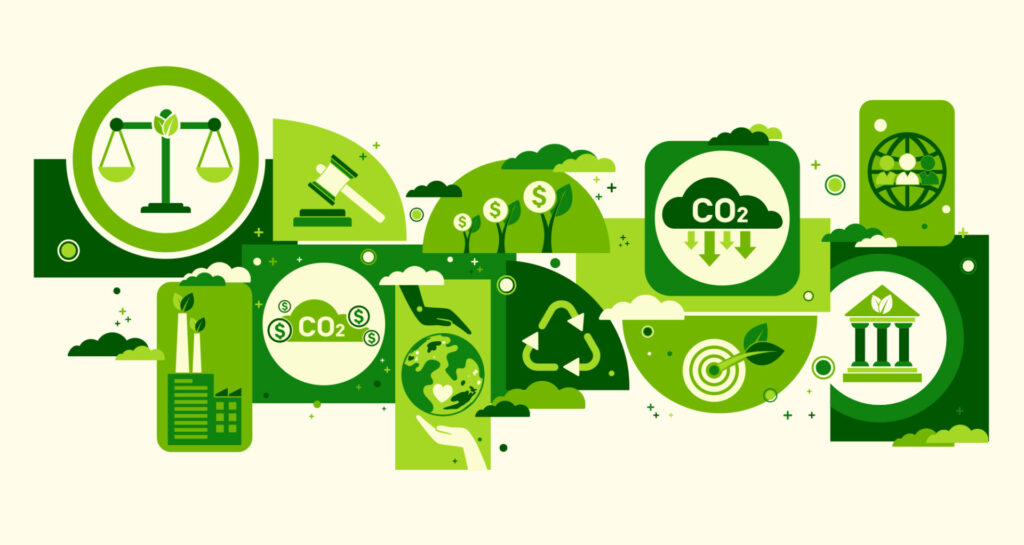
Sustainability reporting standards are evolving rapidly. Over the past decade, organisations have grappled with a proliferation of frameworks such as Global Reporting Initiative (GRI), Sustainability Accounting Standards Board (SASB), Task Force on Climate-related Financial Disclosures (TCFD) and others. Although this “alphabet soup” created complexity, the emergence of the IFRS Sustainability Disclosure Standards – IFRS S1 and S2, developed by the International Sustainability Standards Board (ISSB), represents meaningful progress towards global convergence.
Jesper drew an analogy with financial reporting. Accounting standards took decades to harmonise globally; by comparison, sustainability reporting is converging at a remarkable speed. While challenges around comparability and data quality remain, the direction is clear: sustainability reporting is becoming an integral part of mainstream corporate reporting, closely linked to enterprise value and investor decision‑making.
However, there is ongoing divergence, particularly between the single materiality approach focusing on investors (i.e. ISSB) and the double materiality approach adopted in Europe, which consider broader societal and environmental impacts. For multinational businesses, navigating both perspectives will remain necessary in the near term.
As sustainability frameworks mature, attention is also turning to the policy tools that can drive behavioural change and support sustainable outcomes.
Taxation as a driver of sustainable behaviour
Taxation is not merely a support function in the sustainability journey, but one of the most powerful tools available to governments to influence behaviour and finance sustainable development.
Tax policies fund public infrastructure, social programmes, and climate initiatives that underpin SDGs. At the same time, targeted tax incentives and environmental taxes shape corporate and consumer behaviour. Examples discussed include carbon taxes, emissions trading schemes, plastic and sugar taxes, and incentives for renewable energy, green technology and Research & Development.
In the Malaysian context, there is growing momentum around ESG‑linked tax incentives, the development of voluntary carbon markets, and discussions on carbon pricing. Globally, mechanisms such as the EU’s Carbon Border Adjustment Mechanism (CBAM) are already influencing exporters’ cost structures and strategic decisions.
Jessica highlighted that sustainability standards such as IFRS S1 and S2 explicitly require companies to consider tax risks, incentives, and impacts as part of sustainability‑related financial disclosures. This reinforces the reality that tax considerations are embedded in sustainability strategies and are not separate.
The expanding role of tax professionals
In line with this, the role of tax professionals is undergoing a fundamental shift. Ivana observed that tax professionals today are no longer confined to compliance and calculation. They are policy advisors, business partners, and translators who help boards and stakeholders understand how tax intersects with sustainability, governance and value creation.
Tax professionals increasingly operate at the intersection of multiple functions e.g. finance, sustainability, supply chain and strategy. They must collaborate across disciplines, manage complex data requirements, and contribute to corporate narratives around transparency and responsibility.
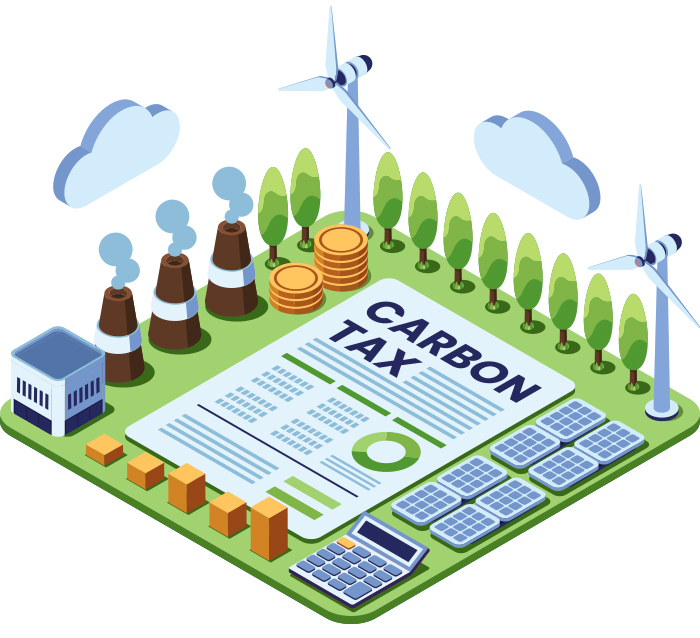
Pauline added that the total taxes paid by a company including corporate tax, indirect taxes, carbon taxes and employee-related taxes are important but often overlooked as part of the ESG effort. Being transparent about tax contributions helps build trust with stakeholders and demonstrates how businesses support national development.
As tax becomes more visible within sustainability and ESG discussions, expectations around governance and transparency are also rising.
Governance, transparency and rising expectations
Tax governance emerged as another critical pillar. In Malaysia and globally, tax authorities are increasingly articulating expectations around tax control frameworks, documentation and oversight. While these concepts are not entirely new, greater formalisation and transparency mean that tax governance is becoming a visible indicator of corporate quality and risk management.
Jesper noted a global trend towards enhanced tax transparency, including public country‑by‑country reporting and non‑financial disclosures. As a result, tax stakeholders now extend beyond boards and regulators to include investors, journalists and civil society. Managing this broader audience requires careful governance, consistency and integrity.
Balancing ambition with cost and complexity
While sustainability objectives are broadly supported, there are valid concerns around compliance costs and operational burden. Ivana cautioned that businesses must be selective and strategic. Not every SDG or initiative can be addressed at once; organisations should prioritise areas material to their business and stakeholders.
Pauline emphasised the importance of collaboration and data readiness in managing this complexity. “Compliance is not just about meeting another reporting requirement,” she noted. “It is about how well we use data across the organisation, work together across functions, and plan ahead so that tax is not reacting at the last minute.”
Effective use of data, technology and cross‑functional collaboration can help mitigate costs and avoid duplication. More importantly, proactive planning allows organisations to manage their own narrative rather than reacting defensively to regulatory change.

Looking ahead: opportunity amid complexity
Looking ahead to the next five to ten years, sustainability‑related tax policies are likely to expand as governments seek to accelerate climate action and social outcomes. At the same time, reporting standards are expected to stabilise further, reducing fragmentation over time.
For tax professionals, this evolution presents an opportunity. As Jesper observed, tax functions that already excel in governance and business understanding are well positioned to elevate their strategic relevance. Sustainability is simply the next phase of transformation akin to digitalisation that demands new skills, perspectives and leadership.
A new seat at the table
In closing, Dr Veerinder reinforced the central message: taxation is no longer a back-office function. In an era defined by sustainability, transparency and trust, tax professionals have a vital role to play in shaping strategy, influencing behaviour and supporting resilient, responsible business.
As organisations navigate the sustainability journey, success will depend not only on compliance with standards, but on strategic leadership and taxation is firmly part of that leadership equation.
Join us at the MIA International Accountants Conference 2026 from 9–10 June 2026 at the Kuala Lumpur Convention Centre for insightful and up-to-date conversations shaping the future of the profession.